Mobility made possible.

How Prosthetists Tune Hydraulic Ankles for Real World Gait
Posted on Thursday, 28 May 2026

Inside Echelon: How Prosthetists Tune Hydraulic Ankles for Real World Gait
Hydraulic ankles continue to play an important role in helping prosthetic users achieve smoother, more confident movement across real world environments. To understand how clinicians get the best from devices like the Echelon range, we spoke with Graham Buckley, Blatchford’s National Clinical Lead and Internal Education & Training Lead. Graham shared his clinical approach to selecting, setting up and fine-tuning hydraulic ankles for everyday mobility.
What do you look for in a patient’s gait when choosing an Echelon foot?
Graham: I look for how the user loads and progresses through stance, in particular, heel strike control, smooth tibial progression and energy return and control at late stance. Signs like harsh heel contact, rapid or delayed progression, knee instability, or poor adaptation to uneven ground suggest a need for hydraulic ankle function. Step length and symmetry, speed and confidence on varied terrain also matter. The functions of a hydraulic ankle will provide significant benefits to the majority of prosthetic users, particularly those who require improved socket comfort, shock absorption, controlled progression and better accommodation to slopes and uneven surfaces.
Which initial adjustments on the Echelon make the biggest difference during setup?
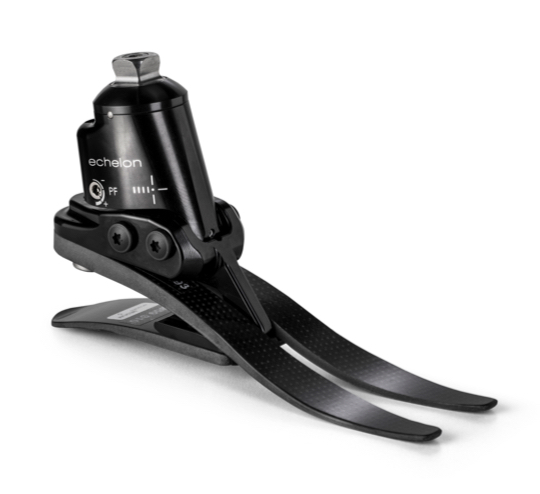
Graham: The biggest impact during setup comes from correct bench alignment using the 6-degree wedge and appropriate footwear. This ensures the foot starts from a neutral position. When the prosthesis is fitted, a stable static alignment is essential so the user is balanced and comfortable. The most noticeable changes occur during dynamic alignment, where small adjustments to plantarflexion and dorsiflexion hydraulic resistances significantly influence stability, progression and the overall look and feel of the user's gait.
What gait signs tell you the hydraulic settings need to be increased, reduced, or left as they are?
Graham: There are lots of signs that guide whether hydraulic resistance needs adjusting. For example, sinking or rapid foot flat at initial contact, slow progression to mid stance or a feeling of walking uphill all suggest I need to increase plantarflexion resistance. If there’s poor control and instability at initial contact, the heel feels too hard or there’s excessively fast progression to mid stance, this indicates I need to reduce plantarflexion resistance.
If there’s a lack of energy return at late stance or the forefoot feels too soft or short, this indicates I need to increase dorsiflexion resistance. Alternatively, if the forefoot feels too long or hard at late stance, this suggests reducing dorsiflexion resistance. If heel contact, progression and toe off look smooth and balanced, settings are likely appropriate.
How do you check that the Echelon foot will work well outside the clinic, on slopes or uneven ground?

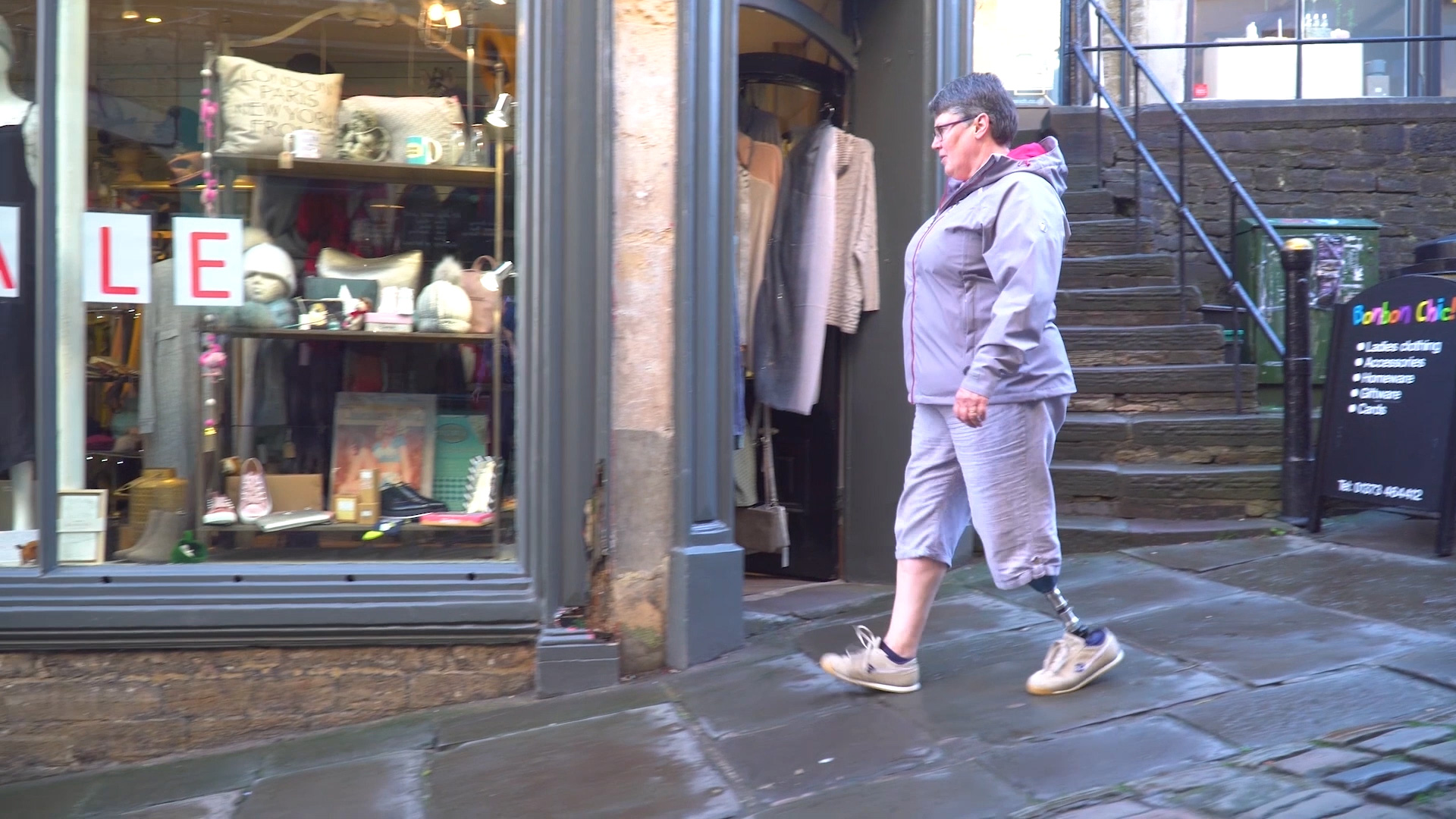
Graham: It’s important to assess function in real-world conditions. By that I mean observing the user walking on slopes, ramps and uneven ground where possible, I tend to focus on stability at heel strike, smooth progression during mid stance and control over the forefoot at late stance. I look for any compensations such as hesitation, knee instability or uneven step length. User feedback is key, so it’s vital to keep asking how it feels on the different terrains. If gait remains smooth, controlled, and confidence is high across terrains, the settings are appropriate.
What simple tuning tips would you share with other clinicians working with the Echelon range?
Graham: Start with a solid bench and static alignment before touching hydraulics. During dynamic alignment, always start with coronal plane adjustments first before moving to the sagittal plane. Make small, single adjustments and reassess; don’t chase multiple variables at once. Use gait signs such as control at heel strike (plantarflexion) and smooth progression over the forefoot (dorsiflexion). If it looks off, check alignment before changing resistances. Always validate changes on slopes or uneven ground and trust user feedback, it’ll usually tell you quicker than over-analysing the gait.
Learn more about the Echelon hydraulic ankle family:
More articles
-

Hydraulic Ankles and Why They Matter
PROSTHETICS TRAININGPosted on Thursday, 18 June 2026 , in Prosthetics
-

Prosthetists on Building Better Rehab Journeys
PROSTHETICS TRAINING CAREERSPosted on Tuesday, 2 June 2026 , in Prosthetics
-

How Avior's Baseline Configurations Are Built for Real-World Rehab
AVIOR PROGRAMMING KNEES MPK MICROPROCESSORS SOFTWAREPosted on Tuesday, 6 May 2025 , in Prosthetics