Mobility made possible.

Hydraulic Ankles and Why They Matter
Posted on Thursday, 18 June 2026

A conversation with Mike Magee, Global Education Manager, Blatchford
Hydraulic ankles continue to change the way clinicians approach prosthetic foot prescriptions, helping users achieve smoother gait, improved comfort, and greater confidence across everyday environments. To better understand the clinical philosophy behind the Echelon™ family, we spoke with Mike Magee, Blatchford’s Global Education Director and Senior Prosthetist. Mike shared his perspective on why hydraulic ankles matter, what makes the Echelon family unique, and why he believes hydraulic technology should be considered the clinical starting point for most patients.
What makes the Echelon family different from other hydraulic ankles?
Mike: There are two main categories of feet: hydraulic feet and fixed ankle feet. What a hydraulic foot does is give the user natural postural sway, even when they’re standing on flat ground. It allows the ankle to move with them instead of forcing the body to compensate for a rigid foot.
That movement helps reduce socket pressures and improves symmetry because the patient can naturally share weight more evenly. Then, when they’re standing on uneven ground, the foot self-aligns to the terrain, so it feels more like they’re standing on flat ground.
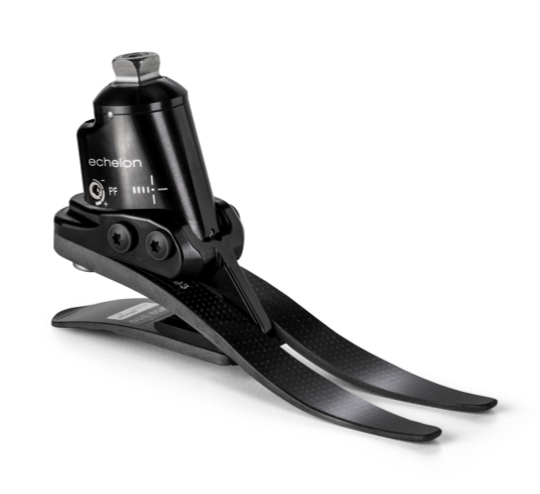
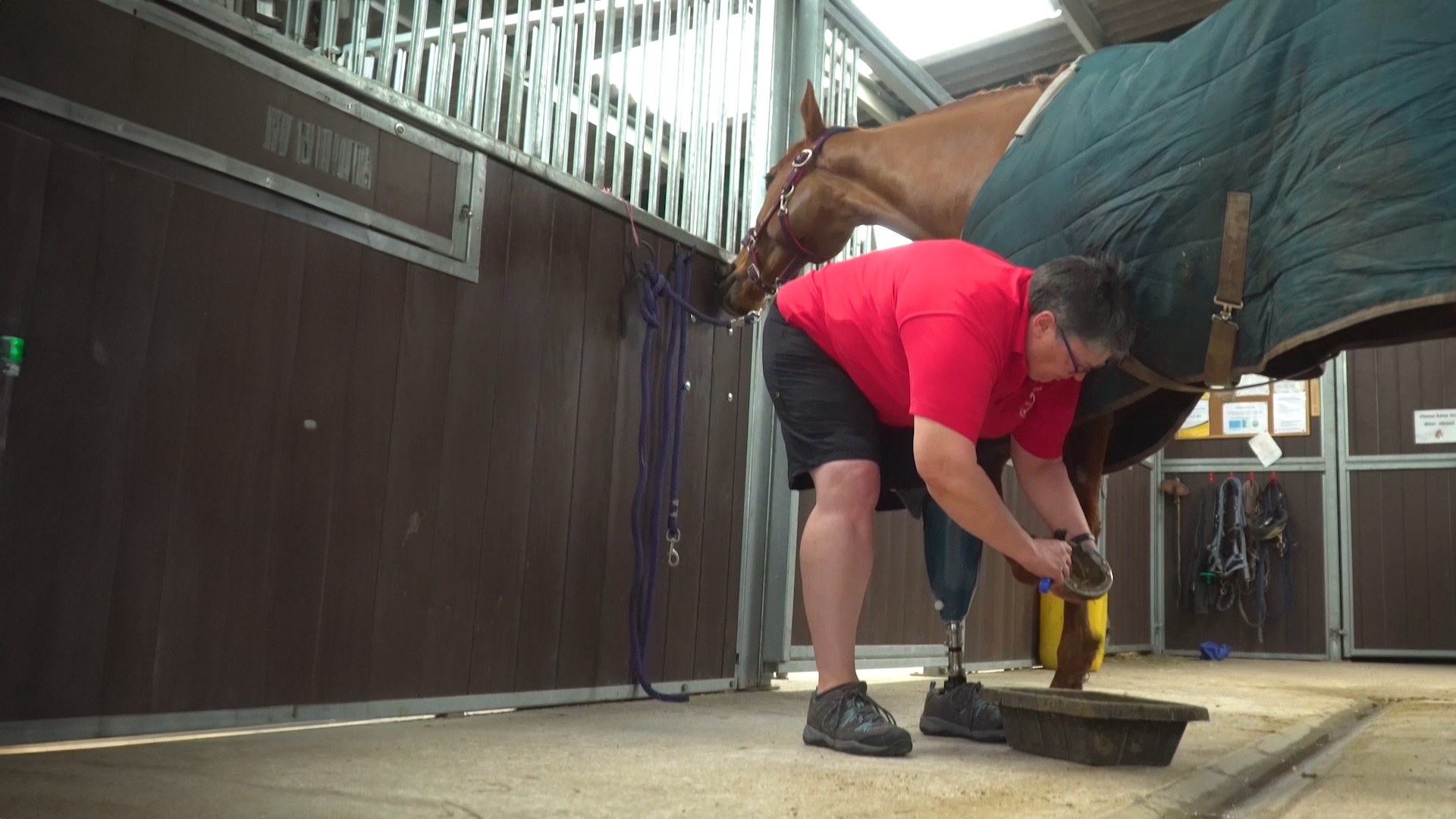
One of the biggest differentiators with the Echelon family is pivot placement. Movement alone doesn’t necessarily make a difference - it’s where the movement occurs that matters. Because we were first to market with hydraulic ankles, we were able to design the pivot placement where we felt it should naturally occur.
What we’re trying to restore is the normal three rockers of gait: heel rocker, midfoot rocker and toe rocker. The hydraulic ankle is responsible for that midfoot rocker. If the pivot placement is too far back, the gait progression becomes less natural. With Echelon, the pivot placement is designed to align more closely with the anatomical ankle, which helps create a smoother heel-to-toe progression.
Why do you believe hydraulic ankles should be considered first for most patients?
Mike: I actually have a presentation called Why Hydraulic Ankles Should Be Your First Choice. My philosophy is that everybody should start as a candidate for hydraulic ankles unless there’s a reason they shouldn’t.
I use the phrase “rule them out versus rule them in.” In other words, the assumption is they are going to do well with a hydraulic ankle unless I decide to put them in something else for a specific reason.
A lot of clinicians still associate hydraulic ankles primarily with hills or uneven terrain, but the benefits go well beyond that. Hydraulic ankles reduce loading rates, improve symmetry, reduce socket pressures and even improve walking speed on flat ground. Research has shown increases in self-selected walking speed compared to rigid carbon feet, which surprises a lot of people.
Some highly active users may still prefer a rigid setup, and occasionally someone simply doesn’t like the additional motion, but for the vast majority of users, hydraulics provide meaningful functional and comfort benefits.
Are there specific patient types or activities where EchelonVT stands out clinically?
Mike: I jokingly call the EchelonVT the “gateway” into hydraulic ankles because if somebody hasn’t experienced hydraulics before, they usually love it once they try it.
The VT has a huge amount of motion and shock absorption. There are studies showing it actually provides more shock absorption than some vertical shock feet because it combines a vertical absorber, ankle plantarflexion and soft carbon springs together.
It works especially well for patients who rotate while moving or work on unpredictable terrain. Things like golf, hiking, hunting, or even occupations like delivery drivers carrying and rotating with heavy boxes. That rotational movement makes a really big difference in those situations.
I think many clinicians still see hydraulic ankles as something reserved for special situations instead of recognizing the everyday benefits they provide.
What changes do you typically see when patients transition into an Echelon foot?
Mike: Inside the clinic on perfectly flat ground, I actually don’t want it to feel dramatically different right away. I want it to feel just as comfortable and dynamic as their previous foot.
The real difference shows up once you go outside. That’s where everything changes because the ground changes. Grass, ramps, uneven terrain, surface transitions, the hydraulic ankle smooths all of those little variations out.
You can usually see the difference immediately in the patient’s reaction. They turn around with a smile because suddenly they’re walking on terrain that used to feel uncomfortable or unstable. One of the most rewarding fittings is watching somebody walk down a ramp and come back up for the first time realizing they didn’t have to compensate or avoid it anymore.
Do patients adapt quickly to hydraulic ankles?
Mike: They usually feel the difference immediately. Getting used to it and feeling it are two different things.
Sometimes there’s a slight learning curve because they’re experiencing motion they haven’t had before. Bilateral users especially can need a little extra time because they’re suddenly balancing on two moving ankles instead of rigid feet. But most people adapt pretty quickly. Occasionally, we’ll let them trial it for a week and revisit alignment afterwards once they’ve adjusted.
One patient example I always think about was a patient with a very short residual limb. I tried multiple feet and couldn’t get her comfortable. We switched her into an Echelon, and her pain completely went away because the hydraulic motion smoothed everything out during walking.
How do you explain the value of hydraulic ankles to patients?
Mike: I use a skiing analogy a lot. If you’ve ever gone snow skiing, the first thing you do when you take your skis off is unbuckle your boots because it’s hard to walk without ankle motion.
That’s essentially what we ask amputees to do every day with rigid ankle feet. Giving somebody a hydraulic ankle is like unbuckling those ski boots; movement becomes easier, smoother and more natural.
What mindset shift would you like to see more clinicians adopt?
Mike: I think many clinicians still see hydraulic ankles as something reserved for special situations instead of recognizing the everyday benefits they provide.
The conversation shouldn’t be, “Is this a good patient for hydraulic ankles?” It should be, “Is there a reason this patient shouldn’t have hydraulic ankles?” That’s the shift I’d really like to see happen clinically.
Learn about the Echelon hydraulic ankle family:
More articles
-

Prosthetists on Building Better Rehab Journeys
PROSTHETICS TRAINING CAREERSPosted on Tuesday, 2 June 2026 , in Prosthetics
-

How Prosthetists Tune Hydraulic Ankles for Real World Gait
FEET ANKLES GAIT HYDRAULICSPosted on Thursday, 28 May 2026 , in Prosthetics
-
How Avior's Baseline Configurations Are Built for Real-World Rehab
AVIOR PROGRAMMING KNEES MPK MICROPROCESSORS SOFTWAREPosted on Tuesday, 6 May 2025 , in Prosthetics